
Kitchen Extensions in Dublin: A Design-Led Guide for High-End Homes
Extension types for Irish homes, open-plan versus broken-plan, natural light, planning permission, and the bespoke joinery that makes the result feel built-in, not bolted on.
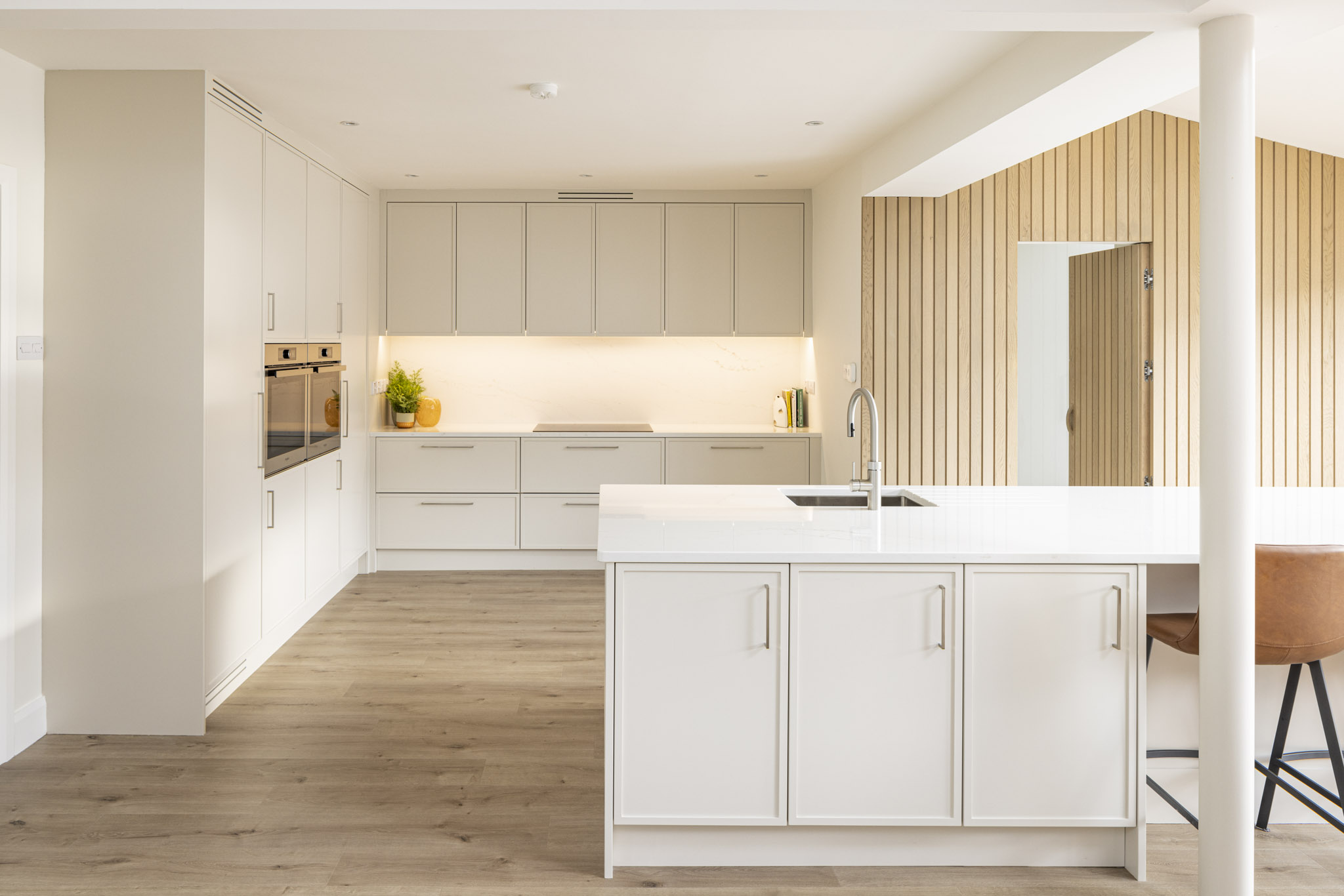
A kitchen extension is rarely just about square metres. For Dublin homeowners in Blackrock, Dundrum, Rathgar, Ranelagh, Ballsbridge, Foxrock and Templeogue, it is the moment the kitchen, dining and living space become one considered environment. The most successful extensions are not a kitchen with a room bolted on. They are designed as a complete space, where layout, light, joinery and everyday function are resolved together from the very first sketch.
What makes a kitchen extension actually work
A kitchen extension works when the new space feels like it was always part of the house. That outcome comes from three decisions made early: the type of extension, the way natural light enters, and how the room is zoned for cooking, dining and living. Get those right and the footprint almost takes care of itself.
In Dublin, most extensions fall into a handful of recognisable types, each suited to a different house style and site, from period terraces with a narrow side passage to semi-detached homes with generous rear gardens.
- Single-storey rear extensions for open-plan kitchen and living space
- Side return extensions that transform narrow period terraces
- Wrap-around extensions for the largest, most flexible footprint
- Glazed garden rooms that connect the kitchen to the garden
The footprint sets the size of a room. The zoning, the light and the joinery decide whether it feels like a home.
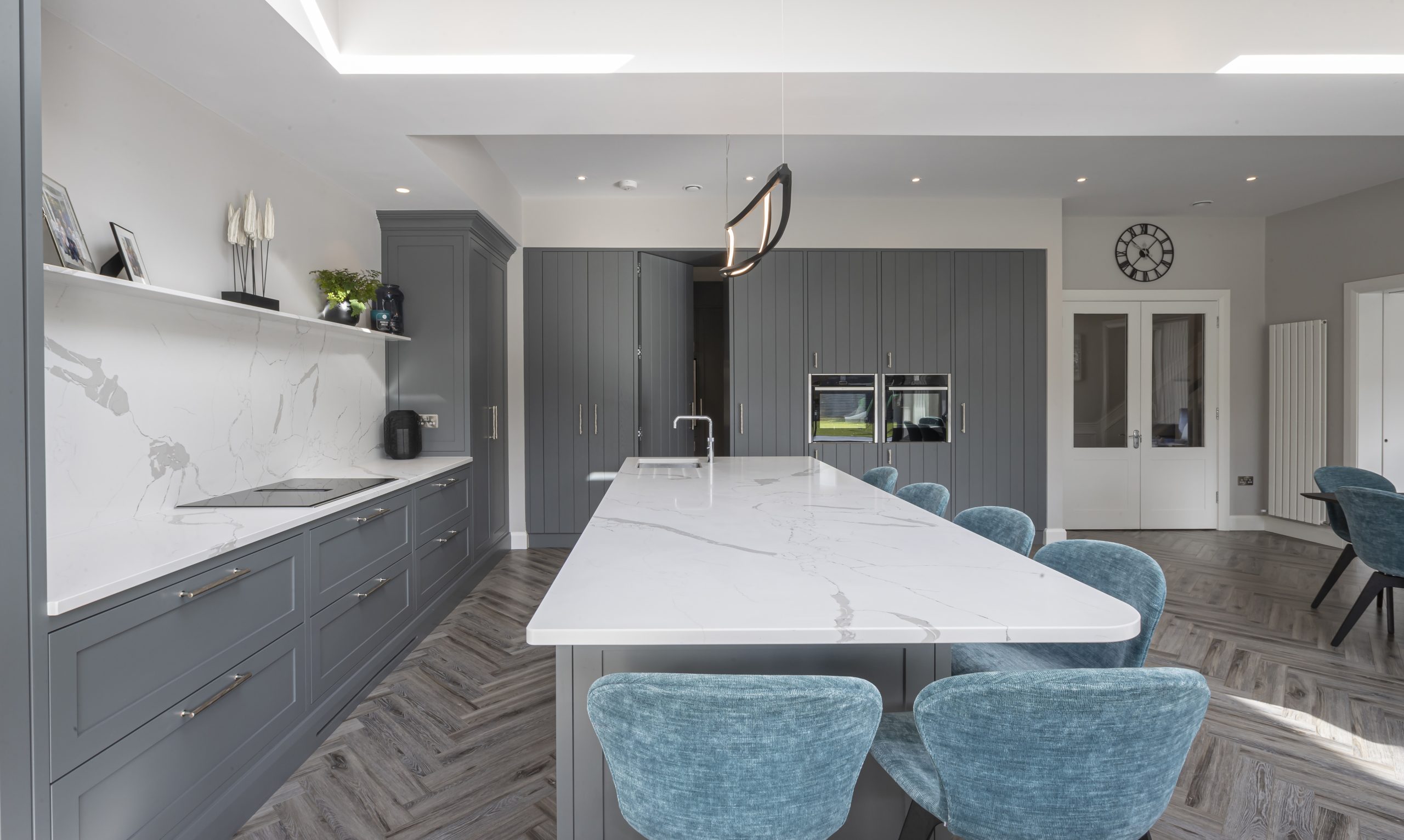
Which kitchen extension suits your home?
Select an extension type to see where it works best, how it handles natural light, and the key design considerations for a Dublin home.
Single-storey rear extension
Extends straight back into the garden to create one large kitchen-dining-living space. The most popular choice for semi-detached and terraced Dublin homes because it delivers the biggest visual change for the footprint.
Side return extension
Fills in the narrow alley to the side of a property, common on older terraced and Victorian-era Dublin homes. Modest in area but transformative, turning a cramped galley kitchen into a full-width room.
Wrap-around extension
Combines a rear and a side return into an L-shape around the back corner of the house. It creates the largest single-storey footprint and the most flexibility for distinct cooking, dining and lounge zones.
Two-storey extension
Extends the kitchen below and adds a bedroom, bathroom or study above. The most efficient way to gain real space when the household is also growing, though it carries more structural and planning weight.
Glazed garden room extension
A largely glazed structure that blurs the line between kitchen and garden. Suits homeowners who want a bright dining or seating space connected to a quieter working kitchen behind it, a broken-plan approach.
Explore the details
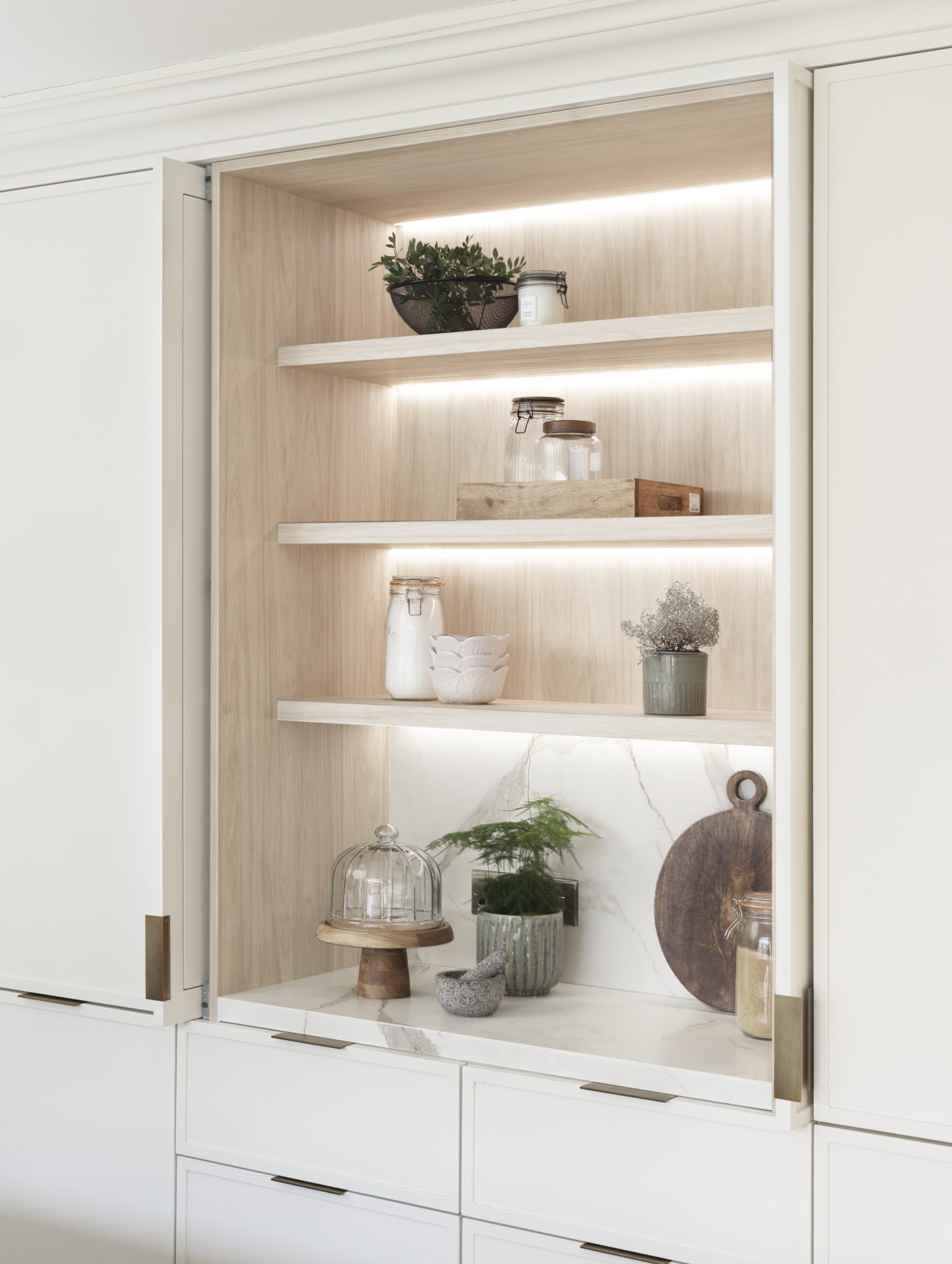
Open-plan or broken-plan: which suits your home?
Open-plan puts cooking, dining and living in one continuous space. Broken-plan keeps them loosely separated using level changes, partial walls, joinery or glazed screens, so the spaces feel connected but distinct.
For high-end homes, broken-plan is increasingly preferred because it keeps the calm of separate rooms without losing the light and flow of open-plan. The decision is really about zoning, giving cooking, the island, dining and living each a clear place within the space.
How a well-resolved space is zoned
- Cooking tucked to one side, out of the main sightline
- The island as the social and circulation hinge of the room
- Dining placed near the glazing, with the best of the natural light
- Living set furthest from the kitchen, the quiet end of the plan
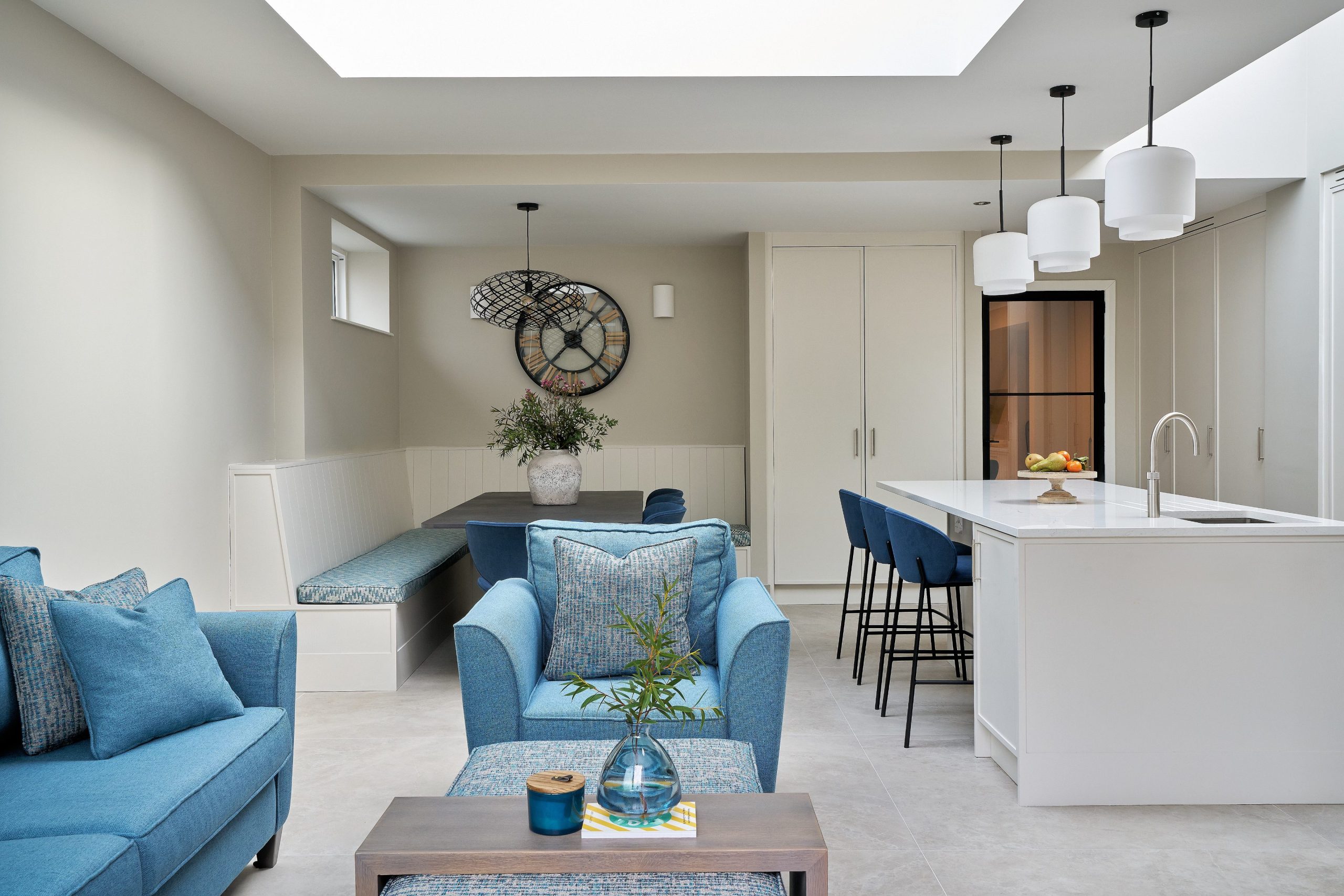
Getting the natural light right
Light is the single biggest factor in how an extension feels, and the most common thing done badly. A deep rear extension can leave the original middle of the house dark unless light is deliberately drawn back into it.
- Rooflights deliver roughly twice the daylight of an equivalent vertical window, lighting the centre of a deep plan
- Orientation matters: south and west bring warmth and evening light but need shading; north light is cool and even
- A glazed link between the existing house and the extension keeps the original rooms bright
The proven moves are rooflights over the new space, generous rear glazing, and a glazed link where old meets new.
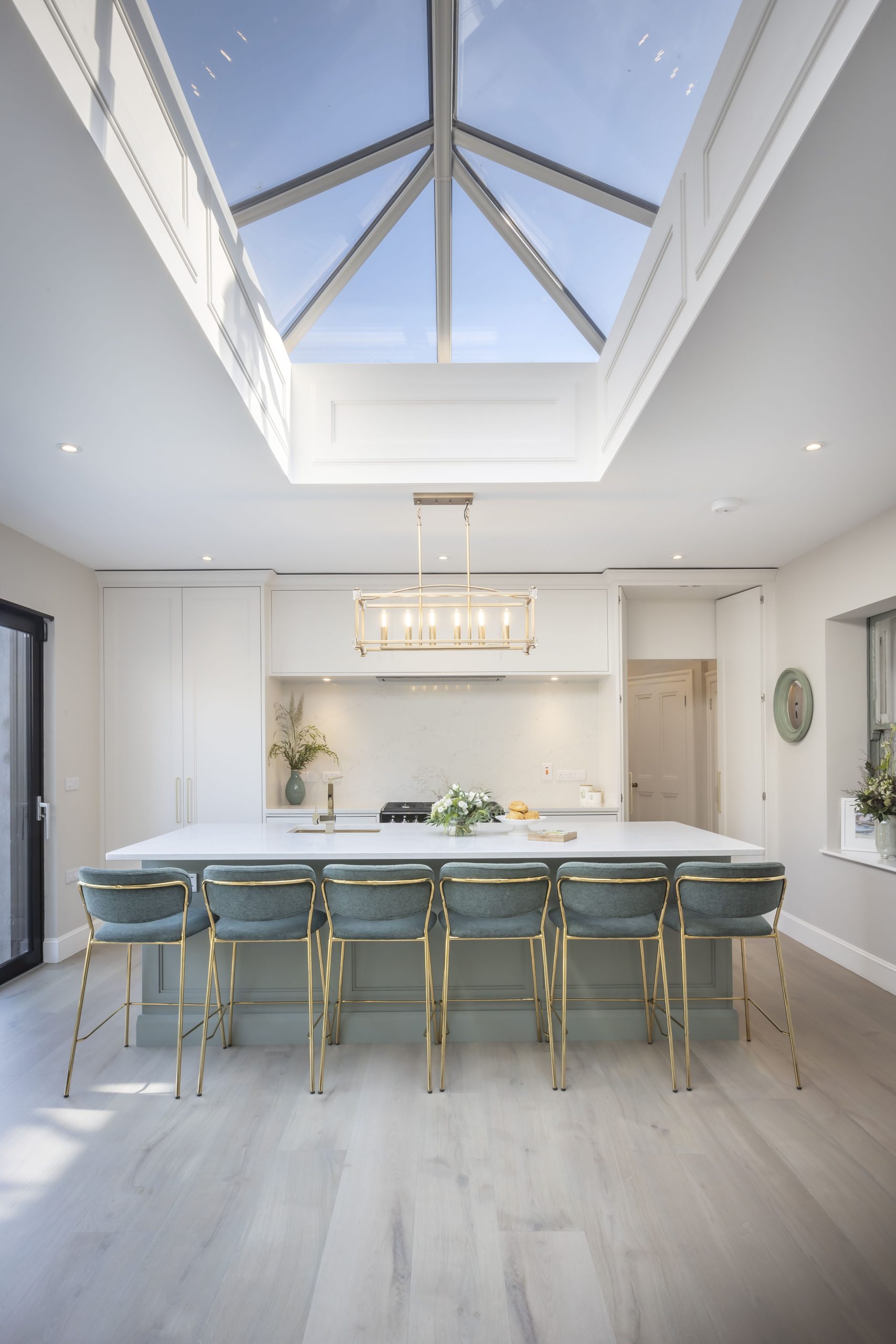
Do you need planning permission for a kitchen extension in Ireland?
Often, no. In Ireland, a rear extension can be exempt from planning permission where the floor area, including any previous extensions, does not exceed 40 square metres, and a number of other conditions are met, such as not reducing the private open space at the rear below 25 square metres and staying within height limits. Side, front, two-storey and larger extensions are far more likely to require permission.
Important to confirm
Exemptions carry specific conditions, and there are exceptions, for example for protected structures or homes in an architectural conservation area. Always confirm your situation with your local authority planning office or a registered architect before you commit to a design. Treat the 40 square metre figure as a guide, not a guarantee.
The kitchen inside the extension is what makes it bespoke
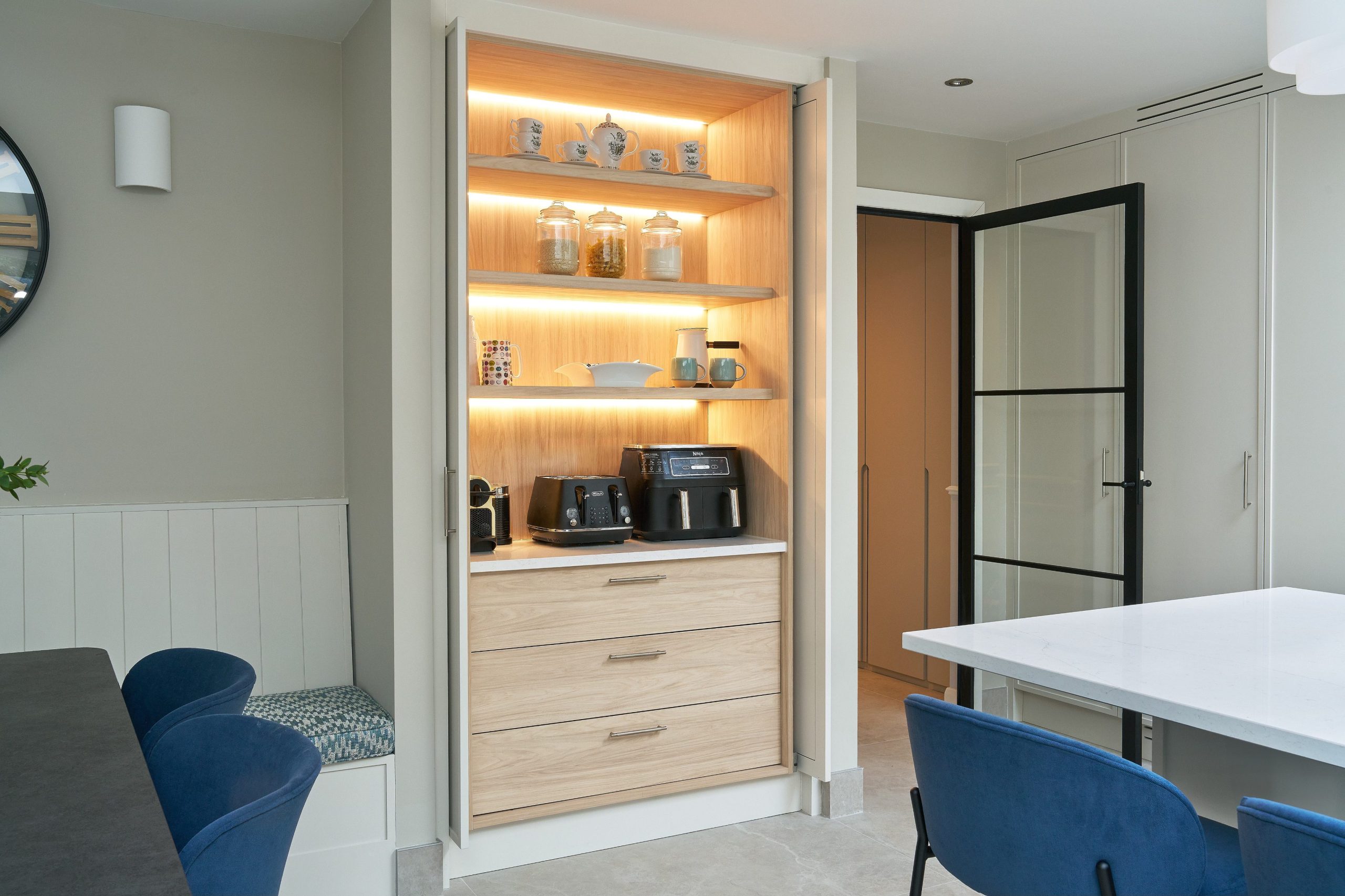
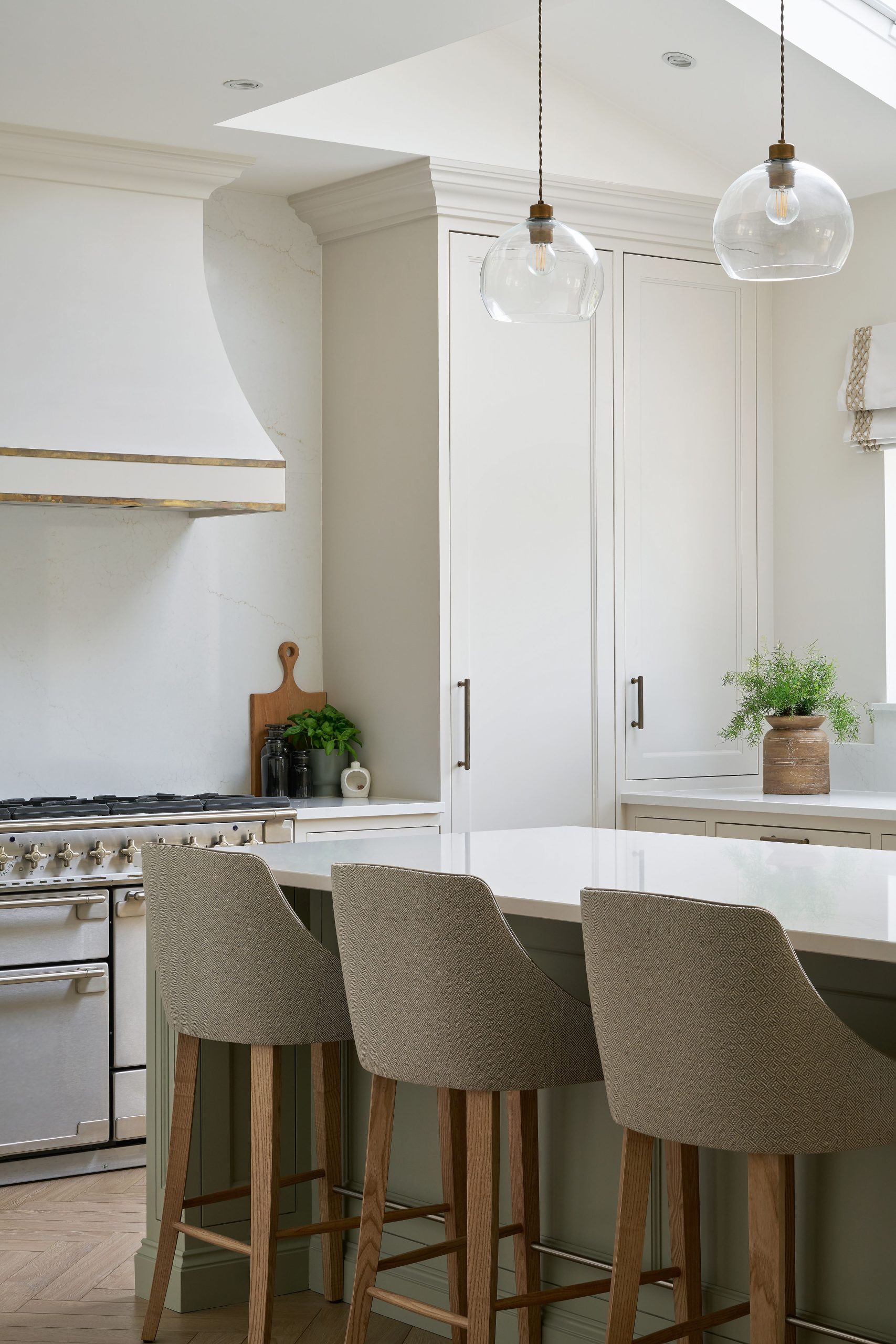
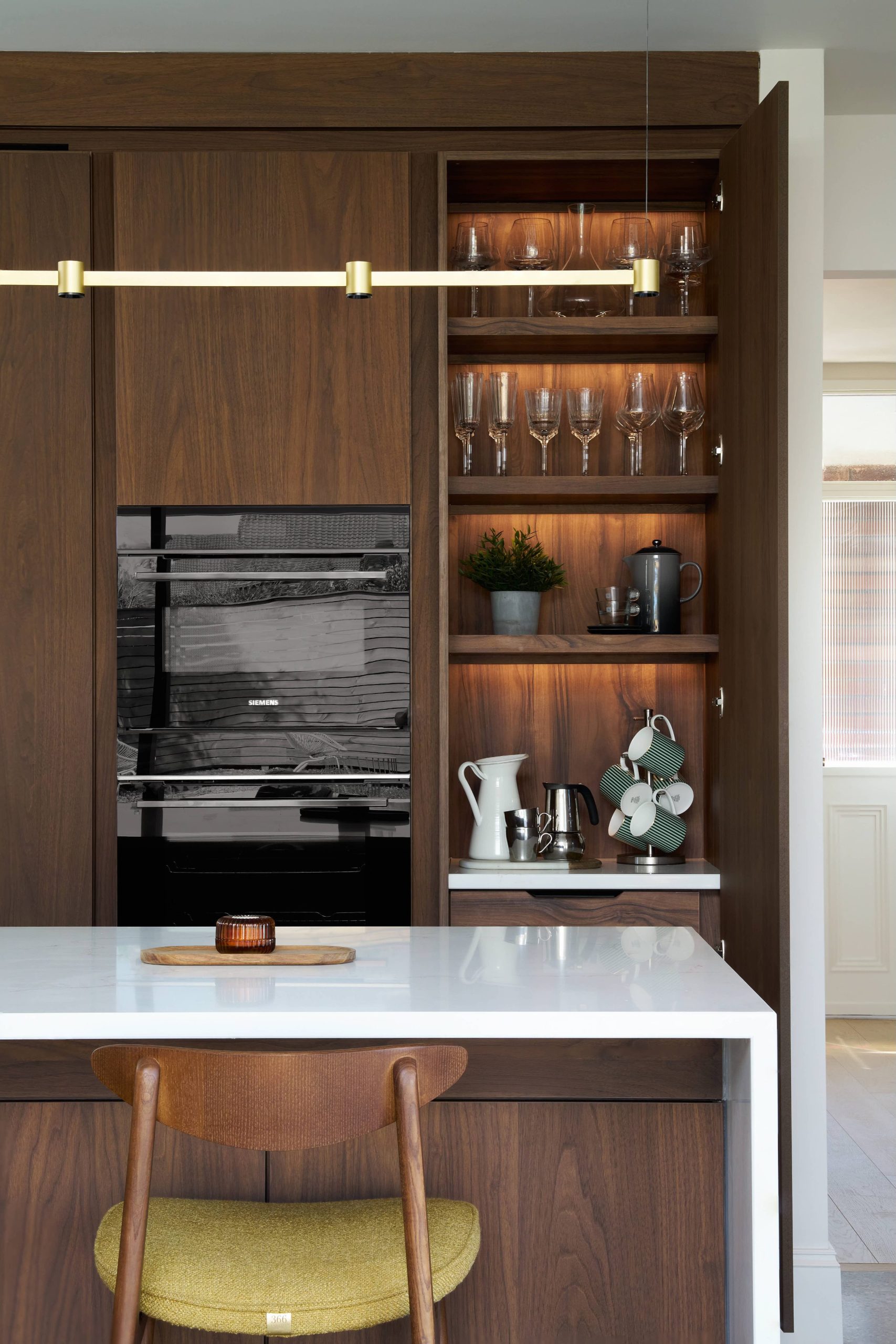
This is where most extensions are won or lost. The building work creates the volume; the cabinetry and joinery decide whether the room reads as bespoke or builder-standard. In a high-end home, the kitchen should feel built into the architecture, not placed inside it.
In an open-plan space the kitchen is on permanent display, so runs should be calm, with appliances integrated and clutter designed out. Carrying the cabinetry language into the living and dining zones is what makes the whole space feel considered.
What turns a room into a home
- Calm sightlines with appliances integrated and clutter designed out
- Continuous joinery linking the kitchen, dining and living zones
- Tall units, fillers and reveals planned to the architecture
- Flush appliance integration and hidden larder storage
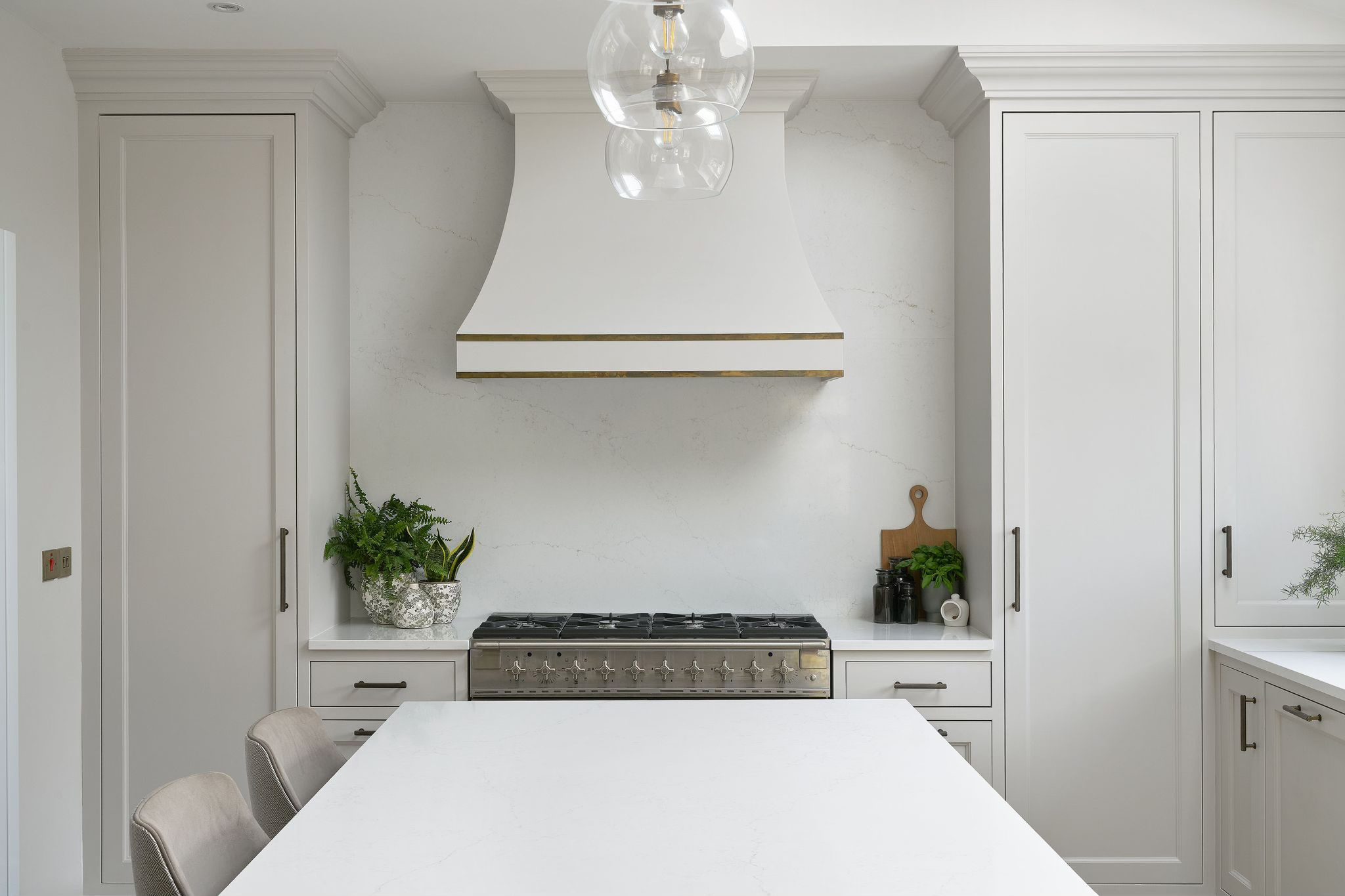
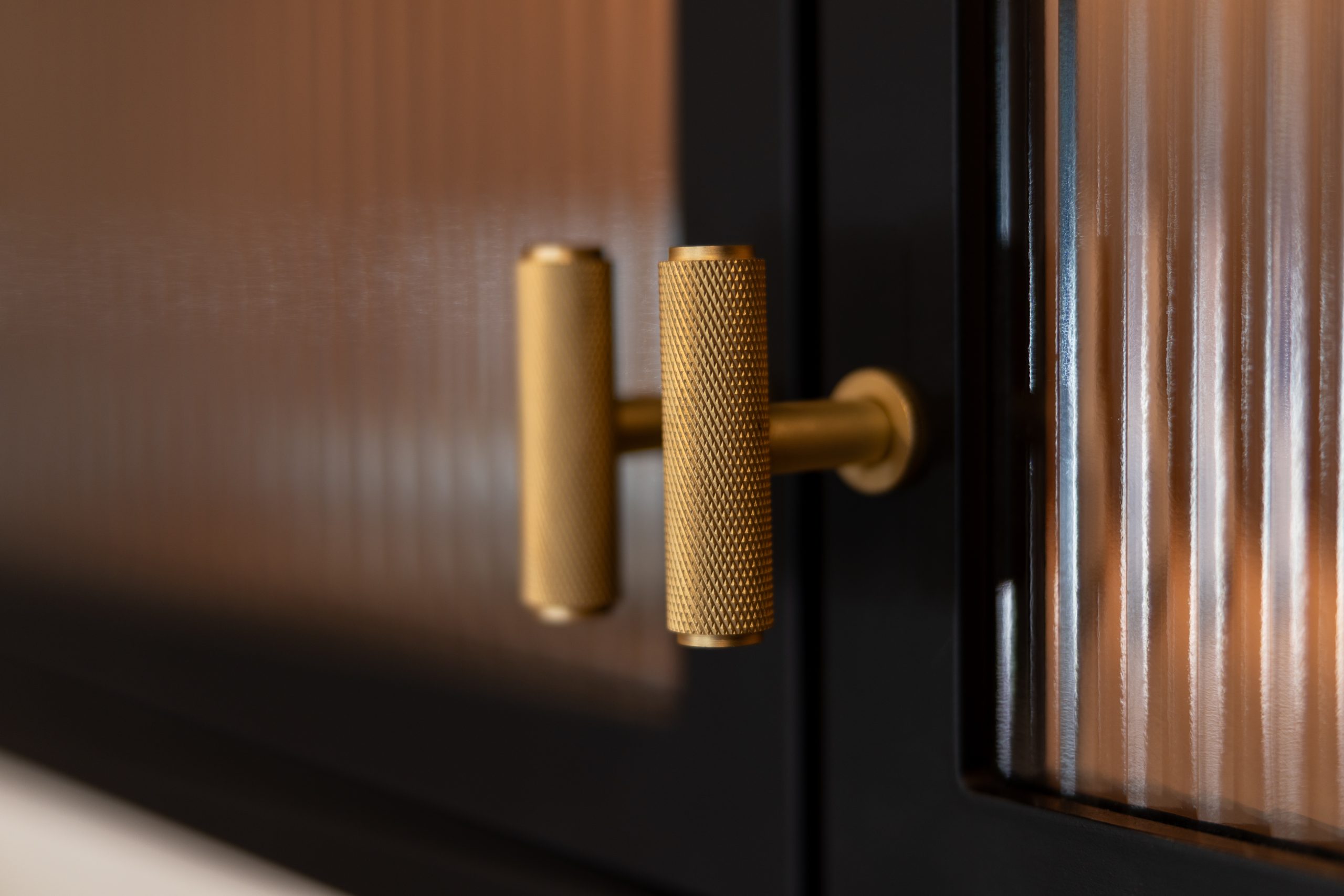
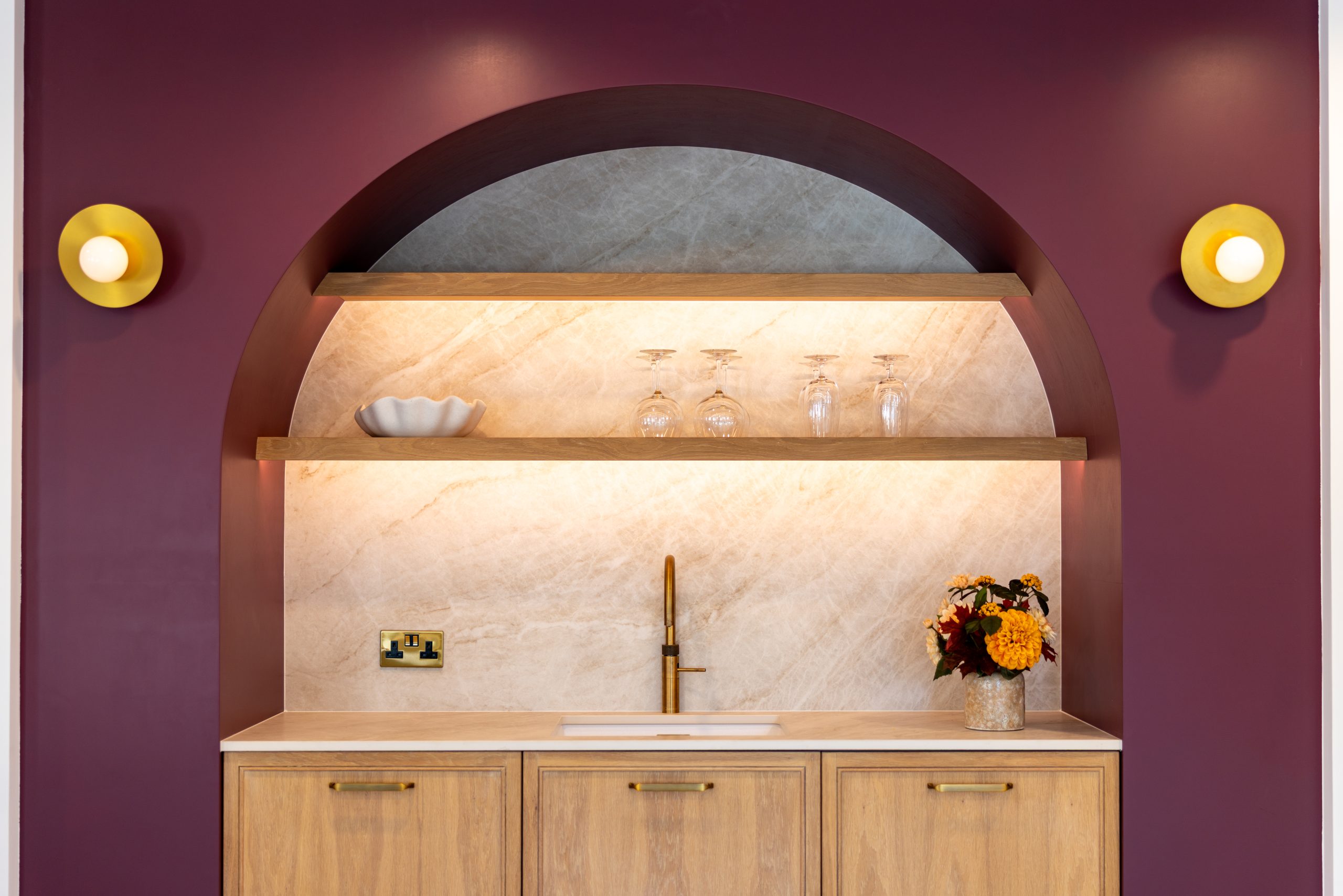
Bespoke joinery in detail
Luxury modern kitchen design in 2026
In the best Dublin extensions, the kitchen itself is moving away from overt gloss toward a quieter, more tactile language: matte lacquers, natural timber, stone and warm neutral palettes that hold their composure for years. Handleless runs, hidden larders and flush appliance integration keep the open-plan view uncluttered.
The aim is a room that feels architectural and calm rather than showroom-shiny, designed to look composed not just on the day it is installed, but after years of everyday life.
The best finish is rarely the boldest. It is the one that still looks composed in five years.
Frequently asked questions
Do I need planning permission for a kitchen extension in Ireland?
Often not. A rear extension can be exempt from planning permission where its floor area, including any previous extensions, does not exceed 40 square metres and other conditions are met, such as retaining at least 25 square metres of private open space at the rear and staying within height limits. Side, two-storey and larger extensions usually require permission, and protected structures and conservation areas have stricter rules. Always confirm with your local authority before designing.
How big can an extension be without planning permission in Ireland?
As a guide, a rear extension up to 40 square metres of floor area, combined with any extensions already built, can be exempt from planning permission if all conditions are satisfied. The exemption is conditional, not automatic, so it should always be verified with your local authority planning office or a registered architect for your specific property.
What is the difference between open-plan and broken-plan?
Open-plan places cooking, dining and living in one continuous, undivided space. Broken-plan keeps those areas loosely separated using level changes, partial walls, joinery or glazed screens, so the spaces feel connected but distinct. Broken-plan is increasingly popular in high-end homes because it keeps the calm of separate rooms while retaining the light and flow of open-plan living.
How do I get enough natural light into a deep kitchen extension?
Combine rear glazing with rooflights over the new space, and consider a glazed link where the original house meets the extension. Rooflights deliver roughly twice the daylight of a vertical window and light the centre of a deep plan that rear glass cannot reach. Orientation also matters: south and west bring warmth but need shading, while north light is cool and even.
Which kitchen extension type is best for a Dublin semi-detached home?
A single-storey rear extension is the most common and effective choice for semi-detached and terraced Dublin homes, creating one open-plan kitchen, dining and living space. Period terraces with a narrow side passage often benefit from a side return, while larger homes wanting clearly defined zones may prefer a wrap-around.
How long does a kitchen extension project take?
Timelines vary with complexity, but a high-end programme typically runs through design development, any planning approval, manufacture of bespoke joinery, and installation. The design and approval stages often take as long as the build itself, which is why resolving them early is important for a smooth result.
Planning a kitchen extension in Dublin?
If you are extending, a design consultation is the best place to begin. It brings clarity to layout, light and materials before any decisions are locked in, so the kitchen and the architecture are designed as one. ONOVO combines design thinking, in-house craftsmanship and delivery discipline within a single residential process.
The most valuable outcome is a home that feels calm, tailored and resolved in every detail, a space that looks as though it was always meant to be there.
Explore our residential kitchen and dining projects.
Also from ONOVO